Monday, 8 February 2016

BLACK HISTORY MONTH: BLACK WOMEN LEADERS

First Published in Africa Business, on 08 August 2013 
by Thandisizwe Mgudlwa
As part of the Black History Month Celebrations in this month of 
February.
The African Recorder will be publishing articles, features, news and documentaries from the African Diaspora.
Indeed, history has provided human society with some extremely successful stories of courage, strength and leadership among other blessed qualities.
Therefore The African recorder is profiling some of the many women who should be recognized as role models for their achievements, excellence and success. From sport to literature, politics to art, black women have been there and continue to shine. 
By Courtesy of Hello Beautiful.
Here is a list of 30 black female leaders:
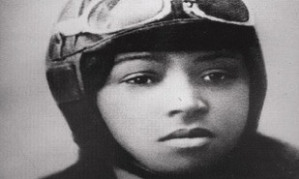
1. Bessie Coleman (pictured above)
Elizabeth Coleman, known also as ‘Bessie’, was the world’s first black female pilot. Born in 1892, Coleman rose to fame in national airshows in Europe and America. After a tragic series of mechanical errors, she crashed her plane while performing in Jacksonville, dying immediately at  the age of 34. Her legacy has continued however – in 1995 she appeared  on US postal stamps and has received a series of posthumous honors across the country for her pioneering work, energy and passion for aviation.
2. Maya Angelou
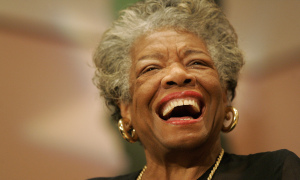
Maya Angelou is a celebrated poet, author, activist and educator. Her work in literature has won her critical acclaim both here and abroad. Meanwhile, Angelou has remained at the forefront of politics and racial empowerment by appearing at inaugurations, rallies and sharing tales of discrimination and struggle with the world.
3. Anna Tibaijuka (United Nations)
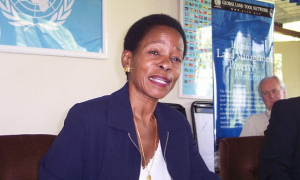
Anna Tibaijuka is the highest ranked African female in the United Nations, heading the UN-HABITAT program. She is a Swedish-educated, Tanzanian-born leader who has fought for the rights of women living in slums or without homes. Since becoming the Executive of UN-HABITAT, she has greatly increased its budget and function in the United Nations.
4. Madam C.J. Walker
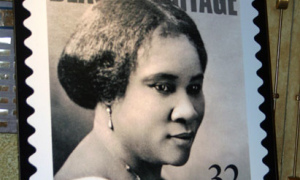
Orphaned at the age of 7, Madam C.J. Walker overcame all adversity to become America’s first black self-made millionaire. She achieved her wealth by developing a range of haircare products that led her across the country and abroad.
5. Shirley Chisholm
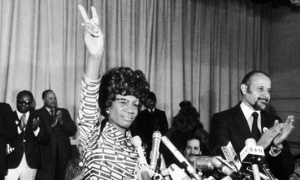
Shirley Chisholm was the first black woman to be elected to Congress, winning in New York in 1968 and retiring from office in 1983. She campaigned for the Democratic presidential nomination in 1972, but is best known for her work on several Congressional committees throughout her career. A feisty politician, Chisholm has also been recognized in popular culture and in the political and academic worlds for her symbolic importance and career achievements.
6. Harriet Tubman
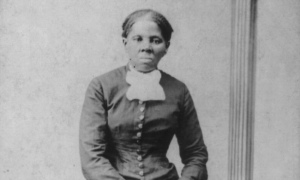
As one of American history’s most prominent figures, Harriet Tubman was responsible for rescuing around 300 former slaves from the South and escorting them to freedom via the underground railroads that led to Maryland. At one point, a $40,000 reward was being offered for her arrest. Tubman was also a spy during her life. She died in New York in 1913.
7. Karen Bass
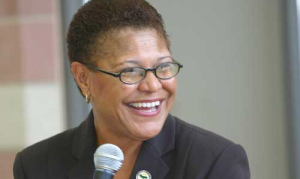
Karen Bass is currently the U.S. Representative for California’s 33rd congressional district. She is also the first black woman to hold the role of Speaker in any state Assembly. In California, Bass has focused on improving education facilities, health care and the foster care system. Bass served as chair of the Legislative Black Caucus, which seeks to better understand California’s black population and their needs.
8. Ida B. Wells
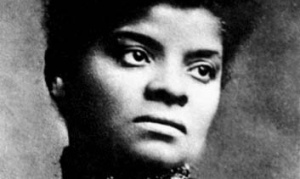
Ida B. Wells was a pioneer in the media and communication industries during the early 20th century. She is most remembered for her role in documenting the practice of lynching.
9. Michaëlle Jean (Canada)
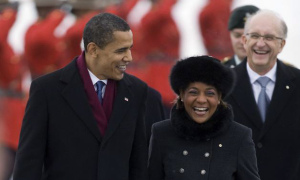
Michaëlle Jean is an extraordinary example of overcoming adversity to rise to the top. She currently serves as the Governor General of Canada, the state role that links the British Monarch with the Canadian government. Jean was born in Haiti but fled the country during the dictatorship of François Duvalier, the man responsible for separating her father from his family for close to 30 years. She worked as a journalist for the Canadian Broadcasting Corporation before being recommended to the role of Governor General and confirmed by Queen Elizabeth II.
10. Dr. Dorothy Height
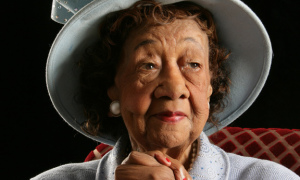
In 2010 the world lost one of its best, with the death of civil rights activist, Dorothy Height.  Among many of Ms. Height’s colleagues were  Dr Martin Luther-King Jr and Rosa Parks. While her passing evoked  sadness, many celebrated her life in recognition of her ardent selflessness.
11. Robin Kelly
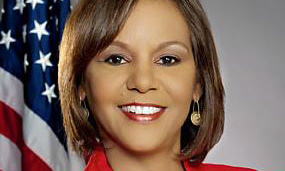
Robin Kelly is an accomplished force to be reckoned with in Illinois state politics and ran for the role of State Treasurer. Robin was the first African American woman to serve as the head of staff of a constitutional officer.
12. Mary McLeod Bethune
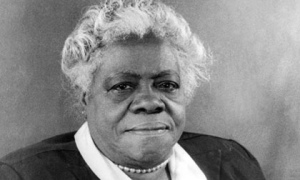
In 1904, Mary McLeod Bethune did something that was almost unheard of in American society at that time. She began a school for young African American girls in Daytona, Florida. That school would eventually flourish and merge with a boys’ school to become Bethune-Cookman University.  Mary McLeod Bethune is also remembered for her innovative work in Civil Rights, including acting as a presidential adviser to a number of our country’s leaders.
13. Rosa Parks
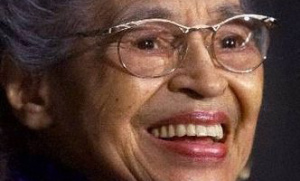
As the ‘Mother of Freedom’ and a figurehead of the Civil Rights Movement, Rosa Parks is almost unmatched in recognition and respect. One seemingly simple act of bravery in 1955 on a Montgomery bus eventually led Parks to the forefront of national attention, giving way to a number of improvements in the lives of ordinary African Americans. She died in 2005 at the extraordinary age of 92.
14. Sojourner Truth
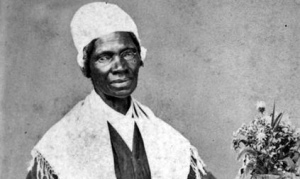
A preacher, gender and racial equality activist born into slavery, Sojourner Truth spread the word of God and equality throughout her lifetime. She is best known for her 1851 speech titled, ‘Ain’t I A Woman?
15. Donna Edwards
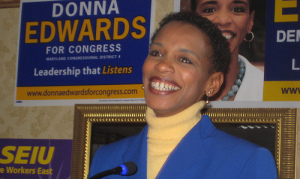
Currently serving as Congresswoman for Maryland’s 4th district, Donna Edwards is the first black woman to represent Maryland in the House of Representatives. She defeated her Republican rival in 2008 with an amazing 85 per cent of the vote. She currently sits on the Transportation and Infrastructure Committee and the Science and Technology Committee.
16. Dame Eugenia Charles (Dominica)
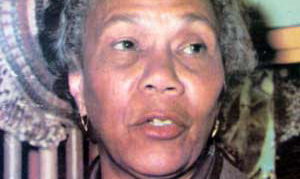
Eugenia Charles was the Prime Minister of Dominica for 15 years until 1995. She was the first female head of state in the Americas and is currently the longest serving female prime minister recorded in world history.
17. Wilma Rudolph
Rudolph is a true survivor and American sporting hero. Despite having suffered from polio and a range of other life-threatening sicknesses, she became a triple Olympic gold medal winner in track and field.
18. Zora Neale Hurston
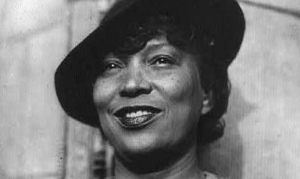
An acclaimed author and folklorist, Zora Neale Hurston contributed greatly to what was known in the world of literature as the Harlem Renaissance. She was also a pioneer for black involvement in the Republican party, a staunch conservative and Republican party favorite.
19. Ellen Johnson-Sirleaf (Liberia)
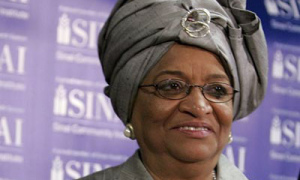
Her country, Liberia, was named in recognition of its intriguing connection to African slavery and, as its President, Ellen Johnson Sirleaf has made leaps and bounds in improving the role of women in aspects of Liberian society. She was elected in 2006 but had no family connection in politics to allow for an easy rise to power. Ellen Johnson Sirleaf is the first black woman to win a presidential election in Africa.
20. Coretta Scott King
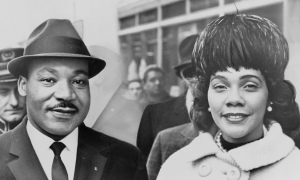
Five years have passed since the death of the Civil Rights pioneer, Coretta Scott King, but her legacy lives on. After the death of her husband, the great Martin Luther King Jr., King became a prominent figure in the Civil Rights and Womens’ Rights Movement, advising the nation’s leadership and pursuing the causes of her late husband. In later years she actively opposed Apartheid in South Africa and became involved in the LGBT movement by urging Civil Rights activists to reject homophobia and the dehumanization of all minorities.
21. Asha-Rose Migiro (United Nations)
Migiro is currently the 3rd Deputy Secretary-General of the United Nations. Along with Anna Tibaijuka, she is one of the highest ranked black women in the UN. Migiro was born and educated in Tanzania.
22. Cathy Hughes
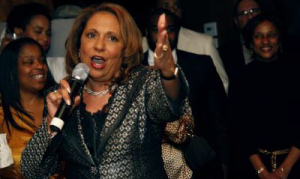
Cathy Hughes, Founder and Chairperson of Radio One, Inc (parent company of Interactive One and HelloBeautiful.com), is a pioneer in business, media and entrepeneurship in America and the black community. In 1979, Hughes launched RadioOne, which since then has become the largest radio broadcast network in the United States with 69 stations in 22 cities. In 2004, she was also behind the launch of TVOne, a dynamic addition to the extensive media company she had started over 20 years earlier. She was once named Ernst & Young Entrepreneur of the Year and has continued to be involved in presenting and producing broadcast programs for her company throughout her three decades in the industry.
23. Kamala Harris
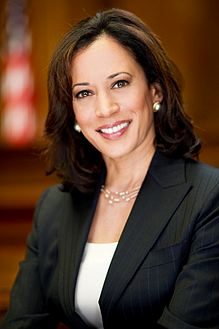
Harris is currently the Attorney General of California.  Previous to her victory in the 2010 State Elections, Harris served in a number of State offices. Harris has worked as an author and a politician and served as District Attorney of San Francisco from 2004 to 2011. First elected in 2003, defeating incumbent district attorney Terence Hallinan, she was re-elected in 2007. Harris is the first female African-American and Asian American attorney general in California.
24. Fannie Lou Hamer
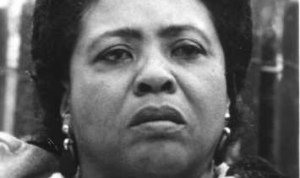
Born in 1917 as the youngest child of a family of 19 children, Fannie Lou Hamer is remembered for coining the phrase, “sick and tired of being sick and tired” in her work as a Civil Rights activist in Mississippi. Her most notable achievement was the inclusion of her colleagues in the Democratic National Convention in 1964.
25. Ayanna Pressley
A former staff member of Congressman Kennedy and Political Director to Senator Kerry in Massachusetts, Pressley is currently a Boston City Councilor. She is expected to reach higher positions in the next few years.
26. Terri Sewell
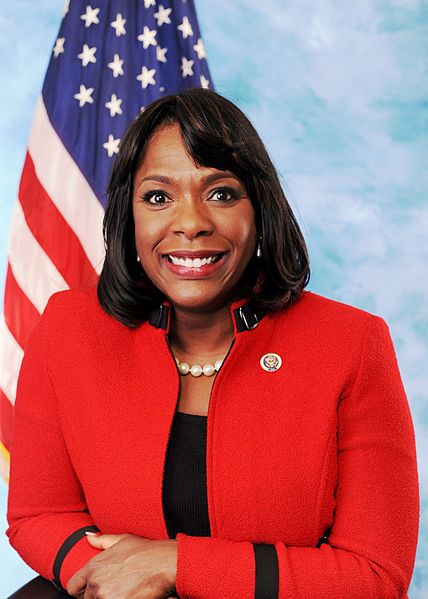
Source: US House of Representatives

A Democrat, Terri Sewell is the representative in Congress for Alabama’s 7th district. She is an accomplished attorney and was educated at Princeton, Harvard and Oxford University. Sewell was the first African-American woman elected to represent Alabama in Congress.
27. Ursula Burns
Ursula Burns is one of America’s most powerful businesswomen. She currently heads Xerox as the company’s CEO and chairwoman. She grew up in a housing project in New York, later entering Xerox as an intern and filling a number of roles before reaching the top job. She is the first black woman to head a company of this size.
28. Ruth Simmons
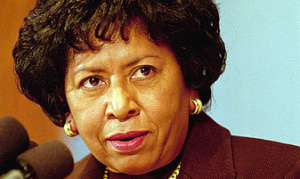
In 2001 Ruth Simmons became the first African-American to take the office of president of an Ivy League university. She is currently the president of Brown University, the first woman and first Texan in that position. Simmons has improved Brown’s budget and its reputation abroad, and has also been recognized on a number of occasions for her work in education.
29. Condoleezza Rice
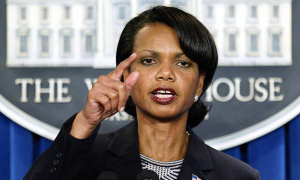
Condoleezza Rice is no woman to mess with. As the first black woman to hold the position of Secretary of State. During her term, Rice was a well known figure of the Bush administration both nationally and abroad. But in addition to her political experience, she is also a published scholar, concert pianist and academic. She is currently working at Stanford University.
30. Gwendolyn Brooks
Gwendolyn Brooks was the first African-American to win the Pulitzer prize for poetry following the release of her second book. She went on to publish over twenty texts and became well known in her home state of Illinois, and across the country for her outstanding contribution to American literature.
Courtesy of Hello Beautiful
Bookmark and Share

Friday, 5 February 2016

FORT HARE UNIVERSITY AT 100

How the inspirational alumni of the University of Fort Hare continue to 
inspire today’s young leaders of tomorrow

Printer-friendly versionSend by emailPDF version

Research any notable university around the world and one of the most important aspects of that research will focus on the 
institution’s alumni, that celebration of past students’ achievements that inspire aspirant students wishing to follow in their illustrious 
footsteps. The alumni provide a powerful snapshot of an institution - its values, its impact on society, and its ability to create a 
challenging learning environment that creates and nutures leaders of tomorrow. Scrolling through the illustrious alumni of the globally 
renowned University of Fort Hare, located in Alice in the Eastern Cape, stimulates many emotions, including an immense sense of pride.

Throughout its history, the institution has launched thousands of graduates into the world who subsequently went on to become 
important, trailblazing figures in politics, business, law, education, medicine, science, and the humanities. Some have made
technological breakthroughs, developed innovative products, or discovered lifesaving treatments, while others have led nations and
revolutions, createdtimeless artwork, or written words that changed the course of history. The institution’s alumni is also an
acknowledgement of the hugely significant impact that these leaders subsequently had on the world, and a feeling that their like will
not be seen again. Many of their legacies are instrinsically intertwined with the struggle for freedom and democracy in South Africa
and on the African continent in general, and live on today in the hearts and minds of citizens in each country, long after their passing.

Looking back at the University of Fort Hare’s alumni through history is remarkable given its challenging and turbulent history 
and the profoundly damaging impact of the apartheid regime in South Africa. How many other such institutions in the region can
proudly count seven African presidents amongst its alumni, all emerging from the institution equipped to take on the mantles of political 
leadership in their own countries. These included South Africa’s inspirational Nelson Mandela; Botswana’s First President Seretse
Khama; Tanzania’s President Julius Nyerere;  Zambia’s First President Kenneth Kaunda; Interim President of Uganda Yusuf Lule; 
President of Zimbabwe Robert Mugabe; and Kaizer Matanzima President of Bantustan Transkei.

President Mandela who studied Latin and physics there for almost two years in the 1940s, left the institution as a result of a conflict with
 a college leader, but its impact was significant during his time there and beyond. He later wrote in his autobiography that “For young black
 South Africans like myself, it was Oxford and Cambridge, Harvard and Yale, all rolled into one.” Today, his legacy at the University lives
 on through The Nelson R Mandela School of Law.

It is fully committed to fulfilling the University of Fort Hare strategic mission which enjoins the School to provide world class legal 
education offerings and research outputs of high quality and excellence. Consistent with the values that Nelson Mandela represents,
the Law School envisions itself as an institution in which the values of humanism, societal leadership, equality and excellence are 
enthusiastically embraced and celebrated by staff and students alike.


The University of Fort Hare has long been a fertile breeding ground for new young leaders of the future to shape their destinies and that of their countries over the years to come. Throughout its history, several other leading South African opponents of the apartheid regime attended Fort Hare, among them Oliver Tambo of the African National Congress; Mangosuthu Buthelezi of the Inkatha Freedom Party; Robert Sobukwe of the Pan Africanist Congress; Desmond Tutu now Archbishop Emeritus; Chris Hani leader of the South African Communist Party and Chief of Staff of Umkhonto we Sizwe, the armed wing of the African National Congress; and activist and politician Govan Mbeki, father of former President Thabo Mbeki. They remain powerful and inspirational role models today for the thousands of young students who follow in their footsteps.

The university also boasts a number of the current generation leadership found in politics, government and corporate including Sizwe Nxasana, Lazarus Zim, Kunene Brothers, Khaya Ngqula, Bulelani Ngcuka, Wendy Luhabe, Irvin Khoza, Tim Modise, Don Ncube, Former Premier of the Eastern Cape Rev Makhenkesi Stofile, Former KZN Premier Dr Frank Mdlalose, Current Free State Premier Ace Magashule, the list goes on.

The University of Fort Hare has long held a reputation for the nurturing of inspirational leaders in Africa, and has leadership running through its veins. It is thus inspiring to learn of the institution’s Center for Leadership Ethics in Africa (CLEA) that is building on the achievements of the past and preparing itself to create a new generation of leaders capable of addressing the many new challenges facing the African continent today. The world is looking to this new generation of leaders to convert Africa’s significant natural, cultural and human resources into stability, development and sustainability. Good leadership is the single most critical factor in harnessing potential into activity that will guarantee survival on the planet, a reversal of inequality and a rebuilding of social cohesion.

The Centre for Leadership Ethics in Africa (CLEA) at Fort Hare is a cross-disciplinary initiative that conducts research, develops postgraduate curricula and shapes debates about leadership ethics in post-apartheid South Africa and its wider theoretical and global significance. CLEA sees itself contributing to the crafting of a new generation of enlightened leaders within a space of lively and imaginative intellectual engagement.

The University of Fort Hare’s centenary celebrations in 2016 provide the perfect opportunity for reflecting on the institution’s past and the achievements and track records of those successful students who have added to its reputation and history. The institution’s alumni acts as a powerful magnet for present and past pupils to merge, to share experiences and insights, and to contribute to solving the many challenges that exist in today’s turbulent world. Alumni associations by their very nature allow students not only to look back and reflect on the past, but also to look forward to becoming a part of the association itself. They instill a deep sense of history and pride within the student body and  staff, and help to develop a culture where students see the possibilities for themselves.

As the University of Fort Hare celebrates its 100 years of existence, and takes the time to reflect on the significant impact it has had on the socio economic and political landscape of South Africa and the African continent as a whole during that time, it can reflect on the importance of a strong alumni. These men and women are the flag bearers of change, the role models for others to follow, and the innovators who see challenge as opportunity. Today’s students should take the time to remember that those very same alumni members whose names today conjure up images of strong and inspirational leadership in the darkest of days, sat at those same desks that they themselves occupy today. It’s a powerful motivator. Their experiences and their example can teach these new generations of students that if they wish to achieve success, they have to earn it. They have to continually push the boundaries of knowledge, strive for excellence, work hard and leave similarly inspirational footsteps for others to follow.

Luthando Bara, is a former student of Fort Hare who rejoined the institution as Director of Communications. He is currently a businessman

BLACK HISTORY MONTH: History of the Venda Nation

Venda

Venda Community at Leshiba Lodge.
Venda Community at Leshiba Lodge
Picture Gallery

Introduction:

As with most of the other peoples of South Africa the Venda (VhaVenda) came from the Great Lakes of Central Africa. They first settled down in the Soutpansberg Mountains. Here they built their first capital, D'zata, the ruins of which can still be seen today. Venda culture has an interesting mix of other cultures - it appears to have incorporated a variety of East African, Central African, Nguni, and Sotho characteristics. For example, the Venda forbid the consumption of pork, a prohibition that is common along the East African coast. They also practice male circumcision, which is common among many Sotho, but not among most Nguni peoples.
The Venda language, TshiVenda or LuVenda, emerged as a distinct dialect in the 16th Century. In the 20th Century, the TshiVenda vocabulary was similar to SeSotho, but the grammar shares similarities with Shona dialects, which are spoken in Zimbabwe. Today about 875 000 people in South Africa speak Tshivenda. The history of the Venda starts from the Mapungubwe Kingdom (9th Century). According to historical studies King Shiriyadenga was the first king of Venda and Mapungubwe. Shiriyadenga was succeeded by his children.

Historical Background:

From 800AD, the Mapungubwe Kingdom emerged, stretching from the Soutpansberg in the south, across the Limpopo River to the Matopos in the north. The Mapungubwe Kingdom declined from 1240, and the centre of power and trade moved north to the Great Zimbabwe Kingdom. A shifting of focus to Zimbabwe's Khami and Rozwi empires followed, but the culture did not come to a standstill. South of the Limpopo Shona-Venda and Venda pottery styles developed in the 14th and 15th Centuries. There are no stonewalled ruins comparable in size to Great Zimbabwe in the northeastern part of Northern Province, but those in the mountains show a link.
Accompanying the development of these centres, from about 1400, waves of Shona-speaking migrants from modern Zimbabwe (known by the Venda as Thavatsindi) settled across the Lowveld. The Venda are generally regarded as one of the last black groups to have entered the area south of the Limpopo River. Their history is closely related to the history of their successive captains' houses, especially those who were descended from their legendary ancestor, Thoho-ya-Ndou (Head of the Elephant).
Thoho-ya-Ndou's kraal (home) was called D'zata and the remains of this have been declared a National Monument. D'zata had great significance for the Venda because they buried their chiefs facing it. When Thoho-ya-Ndou died, divisions arose between the different captains' houses as a result of disputes regarding the question of who was to succeed him. In Venda tradition, succession to the throne is a complex matter and their history has been characterised by many disputes over occupancy of the throne. Today there are 26 captains' houses that trace their origins to the great man while a few others trace their ancestry to tribes that were later incorporated with the Venda.
However, the true Venda can be divided into 2 groups, namely a western group, primarily of Singo origin and descended from the followers of leaders such as Mphephu, Senthumule and Kutama; and an eastern group who regarded themselves asdescendants of Lwamonde, Rambuda, Tshivashe and Mphapuli. It was believed that the Singo king could protect his people from attack by their enemies by beating a special drum called the Ngoma Lungundo, ('drum of the dead'). According to legend, the sound of the drum would strike terror in the hearts of the enemy and they would flee. Some Venda say that this king disappeared from his kraal one night with this special drum and neither were ever seen again. It is believed that at Mashovhela "place where the drums can be heard", rock pool on the Morning Sun Nature Reserve, you can still hear the his drum in the echoes of the cliffs and is considered the second most sacred site in Venda culture. One of the most interesting and distinct groups of people who later joined the Venda are the African Semites, the Lemba.
They are believed to be the descendants of Semitic (Arab) traderswho entered Africa around 696AD. The Lemba believe themselves to be Black Jews, descendants of the lost tribe of Israel. They keep to themselves, only marry within their own group and sometimes refer to themselves as Vhalungu, which means 'non-Negroid' or 'respected foreigner'. The beads they brought with them from these far-off countries are still treasured to this day and are used in divination and other magical ceremonies. The Lemba were very good traders and artisans. They were also famous, for their metalwork and pottery. The first contact between the Venda and the whites occurred when the Voortrekker leader, Louis Trichardt came to the area in 1836.
In 1848, the whites established a settlement named Schoemansdal. However, Makhado, the Venda captain at the time, harassed the white settlers to such an extent that they abandoned the town in 1867. This harassment was continued by Makhado's son, Mphephu and eventually led to the Mphephu War when he was defeated and had to flee to Zimbabwe. During the Apartheid period, a homeland was set aside for the Venda people. It covered 6 500 square kilometres and the capital city was called Thohoyandou in honour of the great Venda chief of the same name. It became independent in 1979. Today, the area is once again part of South Africa; located in the Limpopo Province.

Social & Cultural Life

Trade, warfare and intermarriage with Tsonga, Lobedu, Zulu, Swazi and other people, have alsoleft their imprints on Venda culture. The Venda were a protective people, many of whom still practiced polygamy and worshipped their families' ancestors. Members of the different clans could, and did, live in any of the tribal territories, because the tribe was purely a political and territorial unit, consisting of people who chose to owe allegiance to a particular dynasty. It was quite common to find a ruler attracting members of his own clan after his accession. There was no paramount chief each tribe was ruled by an independent chief, who had under him headmen, responsible for the government of districts within the tribal territory.
Most of the chiefs belonged to lineages of the same clan, which crossed the Limpopo River and controlled those whom they found living in the Zoutpansberg in the latter half of the 18th century. Thus there was an important social division in Venda society between commoners (vhasiwana) and the children of chiefs and their descendants (vhakololo). In the Sibasa district (located in Northern Province) there were 12 Venda chiefs some were the descendants of brothers, who were the sons of a ruling chief but broke away and established independent chiefdoms elsewhere. There were a number of differences in the customs of the various clans, especially in religious ritual, but there were no distinct differences between the tribes.

Venda Belief System

The Venda culture is built on a vibrant mythical belief system, which is reflected in their artistic style. Water is an important theme to the Venda and there are many sacred sites within their region where the Venda conjure up their ancestral spirits. They believe zwidutwane, (water spirits), live at the bottom of waterfalls. These beings are only half-visible; they only have one eye, one leg, and one arm. One half can be seen in this world and the other half in the spirit world. The Venda would take offerings of food to them because the zwidutwane cannot grow things underwater.
One of the most sacred sites of the Venda is Lake Fundudzi. Suspicion surrounds the lake, which is fed by the Mutale River yet does not appear to have an outlet. It is also said that you can sometimes hear the Tshikona song although no one appears to be there. The Venda people have a very special relationship with Crocodiles. The area where they live is filled with these dangerous reptiles. The Venda believe that the brain of the Crocodile is very poisonous, therefore they are given right of way by the Venda who do not even hunt them for food.

Venda Rituals

Initiation:
The Domba is a pre-marital initiation, the last one in the life of a Venda girl or boy. The chief or sovereign will 'call' a domba and preparations are made by the families for their girls to be ready and to prepare what's necessary to attend the ceremony (entry fees for the ruler, clothes and bangles). Historically girls used to stay with the chief for the whole duration (3 months to 3 years) of the initiation; nowadays because of schooling, girls only spend weekends at the ruler's kraal.
This rite of passage was attended by both girls and boys after each individual had previously attended other separated initiations dedicated to one's gender; Vusha and Tshikanda for girls and Murundu for boys (the circumcision done during this rite has been introduced by North Sotho). Since the missionaries decided that mixing males and females in the same ceremony was immoral. Only girls attend the Domba which has two main functions teaching girls how to prepare themselves to become wives (birth planning, giving birth and child care, how to treat a husband, and nowadays the teaching of AIDS risks); and bringing fertility to the new generation of the tribe.

Music and Dance

Various rituals are particular to the Venda and certain aspects are kept secret and not discussed with westerners, however, it is known that the python dance, conducted at the female coming of age ceremony (iconic to the Limpopo region) is usually where the chief chooses a wife. Girls and boys dance fluidly, like a snake, to the beat of a drum, while forming a chain by holding the forearm of the person in front. Once a wife has been chosen a set of courtship and grooming rituals take place over a number of days. The tshikona is traditionally a male dance in which each player has a pipe made out of a special indigenous type of bamboo growing only in few places around Sibasa and Thohoyandou (which no longer exists). Each player has one note to play, which has to be played in turn, in such a way as to build a melody.
The tshikona is a royal dance, each sovereign or chief has his own tshikona band. Tshikona is played at various occasions for funerals, wedding or religious ceremonies, this can be considered as the Venda 'national music / dance', which is particular to Venda in South Africa. The tshigombela is a female dance usually performed by married women, this is a festive dance sometimes played at the same time as tshikona. Tshifhasi is similar to tshigombela but performed by young unmarried girls (khomba). The Mbila is played in the north of South Africa and more particularly by the Venda. It can be described as a keyboard made out of a piece of wood, which is the resonator, and with metal blades (made out of huge nails hammered flat) which are the keys.
While the Mbila is still widely played in Zimbabwe, in South Africa it is only played by a few old people, who sadly notice that most youngsters are disinterested in their own culture and let it die. The playing of the Mbila is one of the most endangered Venda traditions. The Venda style of playing Mbila is quite different from that of Zimbabwe or Mozambique. 
Drums are central in Venda culture and there are legends and symbols linked to them. Most sets of drums are kept in the homes of chiefs and headmen, and comprise one ngoma, one thungwa, and 2 or 3 murumba.
Drum sets without the Ngoma may be found in the homes of certain members of the tribe, such as the doctors who run girls' 'circumcision' schools. Drums are often given personal names. Drums are always played by women and girls, except in possession dances, when men may play them.

Venda Today

Under the apartheid system the land of the Venda people was designated a homeland so they were fairly unaffected by the political and social changes that had such a massive affect on the rest of the country.
The 1 000 000 strong Venda population was left alone to live the way they had for hundreds of years in their lush, mountainous and remote region, which is why their culture, language, arts and crafts have survived so strongly. Today, many Venda people live in Thohoyandou in the Limpopo. It is situated not far from the border of Zimbabwe.

EYE WITNESS NEWS

DJ SBU TAKES TO THE STREETS TO RAISE FUNDS FOR STUDENTS

The entrepreneur says he sold nearly 240 energy drinks in no less than two hours on Thursday.
DJ Sbu promoting his energy drink at his Sbusiso Leope Education Foundation, Spirit of Humanity campaign. Picture: DJSbu Instagram.

JOHANNESBURG – Entrepreneur and DJ Sibusiso Leope has been trending for all the right reasons.
This time after taking to the streets of Johannesburg to promote a benefit concert that will see him raise funds for his education foundation, SLEF, on Sunday.
The businessman says he sold at least 240 cans of his energy drink, Mofaya, yesterday.
The drink was introduced last year in order to support the programme, which has helped a number of matriculants access higher education institutions over the years.  
He says selling products between traffic is nothing new to him.
“That’s how my career started; I’ve sold on the streets, parking lots and trains. We come together with our team to say ‘why we don’t show people how serious we are about this initiative’. People are actually getting to see how unconventional we are and how determined we are as far as this movement is concerned.”
Last year the SABS threatened to take legal action against Leope for illegally displaying the statutory body’s logo on the drink. 
He was also criticised for faking promoting a fake Forbes cover with his drink in-hand.
Some Twitter users have forgiven the past controversies and have praised him for his latest ‘hustle’.

Africa Biz: On my alleged aloofness - Thabo Mbeki

Africa Biz: On my alleged aloofness - Thabo Mbeki: NEWS & ANALYSIS On my alleged aloofness - Thabo Mbeki Thabo Mbeki |  01 February 2016 Former president takes issue with an ...

Thursday, 4 February 2016

BLACK HISTORY MONTH: The Ancestry of the abaThembu Kings

Image result for soshangane


The Ancestry of the abaThembu Kings

The earliest known ancestor of the abaThembu was Zwide. One his most notable descendants was
Mbulali the father of Njanye.

Mbulali, whose grandson, Thembu, led his people from the present kwaZulu-Natal area to Dedesi in the present day Eastern cape.

Eight generations later, during the 16th century Nxeko led his people from Dedesi to the Msana river (where he lies buried), a tributary of the Mbashe River in Mthatha district. At Msana, his Great Place, Nxeko accommodated, merged and assimilated various fragments from communities such as amaBomvana, amaVundle, amaMpondomise and amaMfengu to build his kingship. Although some of the communities had their own recognised traditional leaders, they acknowledged Nxeko as their principal traditional leader and shared abaThembu custom and culture. Nxeko can thus be regarded as the first king of abaThembu and the AbaThembu emerged as a fairly closely knit community from the reign of Nxeko.

Nxeko fathered amongst others, two sons, Hlanga from the Great House and Dlomo from the right hand house. Nxeko died and was buried at Msana, in the district of Mthatha. After the death of Nxeko a succession struggle ensued between Hlanga and Dlomo which led to a battle at Msana. Hlanga, the heir apparent, was defeated by Dlomo and the traditional leadership shifted to the lineage of Dlomo. Hlanga left to establish his own separate community which was subordinate to the community led by Dlomo of the abaThembu kingship.

Dlomo was the father of Hala, (fl mid 1600s) ancestor of all later Kings. Hala was succeeded by Madiba, Tato,Zondwa, Ndaba and Ngubengcuka - also known as Vusani.


Ngubengcuka ruled from 1800 to 1830. He fathered Mtirara. At his death, Mtirara, his successor, was still a minor and Joyi became regent. Ngubengcuka consolidated abaThembu kingship. He merged with abaThembu fugitives from the wars of turmoil such as amaHlubi, amaTshangase, imiZizi and amaBhele. He successfully defended the kingship against amaQwathi, amaNgwane and amaVundle. Ngubengcuka established a unified Thembuland which stretched from Mthatha to the present day Queenstown. In 1827, during the reign of Ngubengcuka , Matiwane, a Ngwane chief, invaded abaThembu. This was to have a profound impact on the unity of Abathembu, as it forced minor communities like amaTshatshu and others to trek to Queenstown. Matiwane and his followers were defeated by abaThembu with the assistance of the British and amaGcaleka.

When Mtirara came of age he took his rightful place as king of abaThembu. Mtirara fathered three sons:Ngangelizwe, from the Great House, Matanzima from the right hand house and Mfanta from a minor house.Ngangelizwe, was succeeded by Dalindyebo, Jongilizwe (Sampu), Jonguhlanga Sabata, and Buyelekhaya Dalindyebo respectively. Jonguhlanga Sabata was appointed paramount chief of abaThembu as a whole, including Emigrant Thembuland and Bomvanaland with effect from 1 July 1954.

THE DISPERSAL

AbaThembu were first affected by the Mfecane wars when they were invaded by amaBhaca and amaNgwane in the 1820s. Some of the minor houses, notably amaTshatshu, were pushed westward towards Queenstown. In 1830 the Great House under Ngubengcuka continued to experience political instability. This resulted in the abrupt departure of Nonesi, the widowed great wife of Ngubengcuka, and her sons Mtirara and Matanzima from the Mgwali Great Place; which then fell under the chieftainship of Joyi. About 1838 they settled around Rhodana in the present district of Lady Frere. Around 1840 Mtirara, the eldest son of Ngubengcuka, was installed as the king of abaThembu. His Great Place was at Rhodana. He died in 1855, leaving his minor son Ngangelizwe.

After the death of Mtirara, Nonesi again became regent of abaThembu. Around 1860, Ngangelizwe returned to Mgwali and was installed as king of abaThembu at Mgwali. Nonesi remained at Gqebenya with Raxoti Matanzima, even after Ngangelizwe had returned to Mgwali. Shortly thereafter, the land around St Marks (the present-day Cofimvaba) was vacated by amaGcaleka due to the Nongqawuse cattle-killing 18episode. In 1865, the Colonial government offered this land to the residents of Lady Frere (formely known as “Tambookie Location”). This offer was accepted by four of the chiefs, namely Matanzima of amaHala, Ndarala of amaNdungwana, Gecelo of amaGcina and Stokwe of amaVundle. Nonesi, however, refused to move from Lady Frere and was consequently banished to Libode by the Colonial Government.

Matanzima soon became recognised as the leader of the four chiefs who had settled in the former Gcaleka territory, which then became known as Emigrant Thembuland. Emigrant Thembuland consisted of the two present districts of Cofimvaba and Xhalanga. Lady Frere remained part of the Cape Colony and, when the homeland system was introduced, it became part of the Ciskei independent state in 1976 and it was then included in the Regional Authority of Western Thembuland in the 1980s.


Matanzima was succeeded by Mhlobo and Mvuzo respectively. Mvuzo died and was succeeded by his son Kaizer Daliwonga Matanzima, as chief of amaHala. With the introduction of the Black Authorities Act, 68 of 1951 Emigrant Thembuland became a regional authority. Kaizer Daliwonga Matanzima was appointed chairman of the said regional authority. The Republic of Transkei Constitution Act 15 of 1976 constituted the Republic of Transkei. Emigrant Thembuland came to be called Western Thembuland, and Kaizer Daliwonga Matanzima was officially recognised as paramount chief in 1966. He died June in 2003 and was succeeded by his grandson, Zwelenkosi Matanzima, the son of Mtheto Matanzima who had predeceased his father.
The history as narrated above is mostly common cause. However, there are conflicting versions with regard to the status of Matanzima and his successors following the Mfecane Wars.


http://freepages.genealogy.rootsweb.ancestry.com/~royalty/states/southafrica/thembu.html
Peires, JB: ‘The House of Phalo’. 1981, Raven Press, Johannesburg, SA

http://www.info.gov.za/view/DownloadFileAction?id=81349
abaThembu Descent line

Possible YDNA Haplogroup E1b1a (aka E-M2)

Zwide is the earliest known leader of the abaThembu who ruled round about 1080. One his most notable descendants was
Mbulali the father of
Njanye, (fl c1307?) who fathered
Thembu (who led his people out of KwaZulu–Natal to Dedesi in the present day Eastern Cape) and who in turn fathered
Ndilo & Mvelase (who remained with his followers in the present day KwaZulu-Natal. Following the rise of Shaka to power, they became part of the greater amaZulu nation) and
Ntongakazi (Dumakazi),
Bhomoyi, (fl c1517)
Cedume,
Mnguti,
Ntoyi,
Ntande and
Nxeko (b c late 1500s) 1st abaThembu king, whose two sons fought over the succession:
Dlomo & Hlanga (defeated, & left to establish his own separate community which was subordinate to the community led by his brother)
Hala, ancestor of all later kings.
Madiba
Tato
Zondwa (d c1756) and Dlawu
Ndaba (d c1800) Ntlazi ; Xuluma ; Bawana and Bhejula
Ngubengcuka Vusani (c1790 -1830); Fadana, Regent; Jumba; Nkosiyane; Mni; Mphasa and Nene
Mtikrakra (1819 - 1839) Great House Son, King of the abaThembu; Simakade; Mandela Left Hand House Son, Chief of Mveso; Joyi, Regent; Ngonyama; Mgudlwa; Viva; Mqanqeni; Gungubele; Qhwesha; Nohuthe; Ncapayi; & Shweni
Ngangelizwe Qeya (c1846 - 1884), King of the abaThembu; Matanzima Raxoti Right Hand House Son; Mbambonduna; Sigunagathi & Mfanta
Dalindyebo Alava, (1865-1920) King of the abaThembu; Namnawe; Mrazuli; Landile; Silimela, Regent; Ndumiso, Chief at Mpeko, Umtata; Twatikhulu & Mpondlombini
Jongilizwe Sampu, (1902 - 1928) King of the abaThembu; Jongintaba David, Regent; Melingqili; Mpondombini; Melithafa & Norrie
Sabata Jonguhlanga Dalindyebo (1928 - 1986), King of the abaThembu; Melithafa; Bambilanga Albert Mtirara Dalindyebo & Nxeko
Jongisizwe, Buyelekhaya Zwelinbanzi (1964- ), King of the abaThembu, Ndileka & Baka
-Njanye and Bhomoyi's dates taken from: Sihele, E G. (Councillor of the Thembu King of Roda). ‘Who Are The Abathembu; Where Do They Come From?’ Handtyped Manuscript c1933http://www.ru.ac.za/media/rhodesuniversity/content/corylibrary/documents/MS18534.pdf

- The dispute over KIngship between the Matanzima and Dalindyebo descendants was resolved in favour of Dalindyebohttp://www.sahistory.org.za/sites/default/files/Determination%20on%20Matanzima%20And%20Dalindyebo%20Paramountcies.pdf ).